
Bridging Loan Glossary
47 essential bridging finance terms explained clearly for UK property borrowers and investors.
A
Adverse Credit
A borrower profile involving historic credit issues such as missed payments, CCJs or defaults. Bridging lenders often assess asset value and exit strength in addition to credit history.Arrangement Fee
A fee charged for establishing a bridging facility, typically expressed as a percentage of the gross loan.Auction Finance
Short-term funding used to complete property purchases within strict auction deadlines, commonly 28 days. See Auction Bridging Loans.B
Bridging Loan Glossary
A short-term secured loan designed to bridge a funding gap between purchase and refinance or sale.Blended Rate
The effective interest rate across multiple loan tranches, such as senior and junior layers in a structured facility.Borrower
The individual or corporate entity receiving the bridging loan.C
Capital Stack
The structured combination of funding layers used in a transaction, including senior, junior and mezzanine tranches.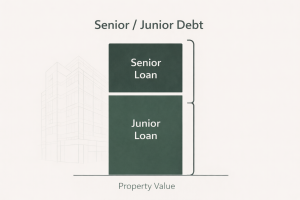
Closed Bridging Loan
A facility with a defined and legally binding redemption date, such as a contracted property sale.Commercial Bridging Finance
Short-term finance secured against commercial or mixed-use property assets.Covenant
A condition within the loan agreement requiring the borrower to meet specified obligations.D
Default Interest
An increased interest rate applied when a loan reaches maturity without repayment or certain terms are breached. See Exit Default Interest Bridging.Development Exit
Refinancing development finance with a bridge facility once works reach practical completion or snagging stage. See Development Exit Bridging.Debenture
A legal charge over a company’s assets used as additional security.E
Equity
The difference between a property’s value and outstanding secured debt.Exit Fee
A fee payable upon redemption of the loan, often expressed as a percentage of the original loan.Exit Strategy
The borrower’s plan for repaying the bridge loan, typically through refinance or sale.F
First Charge
The primary legal charge registered against a property, giving the lender first repayment priority at HM Land Registry.Fast Bridging Loan
A bridging facility structured for rapid completion. See Fast Bridging Loans and Fast Property Loan.G
Gross Loan
The total facility amount including any retained interest and fees.Guarantee
A personal or corporate guarantee that may be used to support repayment obligations.I
Interest Roll-Up
Interest added to the loan balance and repaid at redemption rather than monthly.Intercreditor Agreement
A legal agreement governing priority, rights and enforcement mechanics between senior and junior lenders.J
Junior Secured Loan
A subordinated tranche ranking behind a senior lender but increasing overall leverage. See High LTV Bridging Loans.L
Legal Charge
A registered security interest over a property that enables a lender to take enforcement action if repayment obligations are not met.LTV (Loan to Value)
The percentage of the property’s value being borrowed (loan ÷ value). LTV helps indicate leverage and risk in a facility.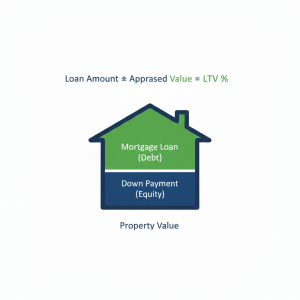
Loan Term
The agreed duration of the bridging facility (e.g., 3, 6, 9 or 12 months).M
Maturity Date
The date by which the loan must be repaid (redeemed). Nearing maturity can create urgency for refinance. See Bridge Loan Extension Finance.Mezzanine Finance
Subordinated funding used to increase leverage within a capital structure, sometimes sitting between senior and equity.N
Net Loan
The amount advanced to the borrower after deducting fees and any retained interest (if applicable).O
Open Bridging Loan
A facility without a fixed redemption date (no set sale date), but within a defined maximum term.Overdraft Replacement
Bridging finance used to replace or repay short-term banking facilities, often to stabilise cashflow during a transaction.P
Practical Completion
The stage when construction is substantially complete and the property is largely fit for occupation, subject to snagging.Personal Guarantee
A commitment by an individual (often a director) to support repayment obligations if the borrowing entity cannot repay.R
Rebridge
Refinancing an existing bridge loan with a new facility. See Rebridge Finance.Refinance
Replacing an existing loan with a new facility, often to change rate, term, structure or lender.Regulated Bridging Loan
A bridging loan regulated by the FCA when secured against a borrower’s primary residence (or that of close family), depending on circumstances.Retained Interest
Interest deducted at completion to cover a portion of the loan term, reducing monthly payments during the facility.Rolled-Up Interest
Interest added to the loan balance and repaid at redemption. Often used when borrowers prefer no monthly servicing.S
Second Charge
A charge ranking behind a first charge lender. Second charge funding can support higher overall leverage.Senior Loan
The primary and typically lowest-risk funding layer within a capital stack, usually secured by first charge.Snagging
Minor outstanding works or defects identified after practical completion, usually resolved before final sign-off.Staged Drawdown
Funds released in phases as a project progresses, often following inspection or monitoring (common in refurbishment finance).U
Unregulated Bridging Loan
A bridging facility not regulated by the FCA, typically used for investment or commercial property where the borrower (or close family) will not occupy the property.V
Valuation
An independent assessment of market value, often undertaken by a RICS-qualified surveyor (RICS).Variable Rate
An interest rate that may change during the loan term, typically linked to a reference rate or lender discretion within agreed terms.Need Clarification?
If you would like guidance on how these terms apply to your scenario, we can review your funding requirements confidentially.
Speak to Berkeley Credit